Spatial Development Initiative (SDI) Promotion is housed under the Udugu Institute, which promotes policy, innovation, and education.
SDI Promotion brings together players from the Public and Private Sectors to:
- Create awareness of the role that the Southern Africa Development Community (SADC) policy on Economic Development Corridors plays in regional integration for greater socio-economic development.
- Promote the implementation of enabling infrastructure like road, rail, telecoms, and power (Anchor Projects) in the various SADC Corridors.
- Promote engagements and discussions on how the main North-South Corridor can become the engine for growth by using inter-Connector Corridors.
- Encourage private and public sectors to develop Bankable Feeder Projects that can be implemented to make Corridors economically viable.
- Mobilize national, regional, and international experts to participate in the above processes.
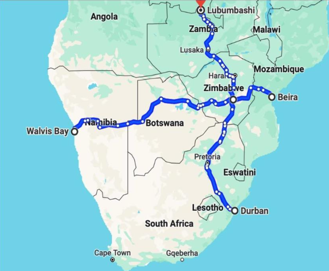
Vision of SDI Promotion: A Socio-Economically Connected Region
Empowering Connectivity, Fostering Growth
At SDI Promotion, we envision a future where our region thrives through deep socio-economic connectivity. Our mission is to create a vibrant, inclusive, and prosperous community where every individual and business can flourish through seamless integration and collaboration.
Strategic Goals:
- Economic Integration: We aim to bridge the economic gaps between urban and rural areas by fostering partnerships and creating opportunities for businesses of all sizes. By promoting local enterprises and encouraging investments, we will build a robust regional economy that benefits all.
- Social Inclusivity: Our commitment is to ensure that every member of our community has access to essential services, education, and opportunities. We will work tirelessly to eliminate social barriers and promote inclusivity, so everyone can contribute to and benefit from our collective progress.
- Innovative Infrastructure: We will invest in cutting-edge infrastructure that supports sustainable growth and connectivity. From advanced transportation networks to state-of-the-art communication systems, our region will be equipped to meet the demands of the future.
- Environmental Sustainability: Our vision includes a commitment to preserving our natural resources and promoting eco-friendly practices. We will champion sustainable development projects that balance economic growth with environmental stewardship.
- Cultural Enrichment: Celebrating our diverse cultural heritage is at the heart of our vision. We will support initiatives that promote cultural exchange, arts, and heritage conservation, enriching the social fabric of our region.
Key Initiatives:
- Community Development Programs: Initiatives that empower local communities through education, healthcare, and employment opportunities.
- Business Support Networks: Creating platforms for businesses to collaborate, innovate, and expand, driving economic growth.
- Smart Cities Projects: Developing smart cities that leverage technology to improve the quality of life and drive sustainable development.
- Green Energy Solutions: Promoting the adoption of renewable energy sources to reduce our carbon footprint and ensure a sustainable future.
- Cultural Festivals and Exchanges: Organizing events that celebrate our cultural diversity and foster mutual understanding and respect.
Our Commitment:
SDI Promotion is dedicated to making this vision a reality. We will collaborate with government bodies, private sector partners, non-profit organizations, and the community at large to drive our initiatives forward. Together, we will create a region that stands as a beacon of socio-economic connectivity, where growth and prosperity are shared by all.
Join Us:
We invite you to join us on this transformative journey. Together, we can build a connected, inclusive, and thriving region that sets a benchmark for others to follow. Let us unite in our mission to promote socio-economic connectivity and create a brighter future for all.
Mission of SDI Promotion
Driving Regional Integration and Economic Growth
At SDI Promotion, our mission is to promote Feeder Investment Projects (FIPs) along strategic corridors, transforming them into thriving hubs of economic activity and development. We are committed to being the leading promoter of regional integration through the creation and enhancement of spatial corridors, fostering connectivity, collaboration, and sustainable growth.
Core Objectives:
- Feeder Investment Projects (FIPs): We aim to identify and support high-potential investment projects along key corridors, providing the necessary resources, guidance, and infrastructure to ensure their success and sustainability.
- Regional Integration: Our goal is to strengthen the ties between neighboring regions by promoting projects that enhance economic cooperation, cultural exchange, and social cohesion.
- Spatial Development: We focus on developing spatial corridors that facilitate efficient movement of goods, services, and people, thereby boosting regional trade and investment.
- Sustainable Growth: We are dedicated to ensuring that all our projects and initiatives promote long-term economic, social, and environmental sustainability, creating lasting benefits for our communities.
Key Initiatives:
- Investment Support: Providing financial and technical support to feeder investment projects to help them achieve their full potential.
- Infrastructure Development: Investing in critical infrastructure along spatial corridors to improve connectivity and support economic activities.
- Partnerships and Collaboration: Building strong partnerships with government bodies, private sector organizations, and local communities to drive regional integration and development.
- Research and Innovation: Conducting research and promoting innovative solutions to address the challenges and opportunities in regional integration and spatial development.
- Community Engagement: Engaging with local communities to ensure that their needs and aspirations are reflected in our projects and initiatives.
Our Commitment:
SDI Promotion is committed to leading the way in regional integration through the promotion of feeder investment projects and the development of spatial corridors. We believe in the power of connectivity and collaboration to drive economic growth and improve the quality of life for all. Together, we can create a more integrated, prosperous, and sustainable region.
Join Us:
We invite you to join us in our mission to promote regional integration and economic growth. Together, we can build a brighter future by transforming our corridors into dynamic centers of development and opportunity.
Values of SDI Promotion
Guiding Principles for a Thriving Region
At SDI Promotion, our core values drive our actions and decisions, shaping our approach to achieving our mission and vision. These values reflect our commitment to excellence, ethical conduct, and our dedication to the collective prosperity of our region.
Our Core Values:
- Professionalism: We uphold the highest standards of professionalism in all our activities. We are dedicated to delivering quality results with competence, efficiency, and a commitment to continuous improvement.
- Collaboration: We believe in the power of collaboration. By working together with stakeholders, partners, and communities, we can achieve greater impact and drive sustainable development. Our collaborative approach ensures that diverse perspectives are valued and integrated.
- Integrity: Integrity is at the heart of everything we do. We are committed to transparency, accountability, and ethical conduct. We build trust through honesty and consistency, ensuring that our actions align with our words.
- Pan-Africanism: We are inspired by the principles of Pan-Africanism, advocating for unity, solidarity, and mutual support among African nations. We strive to promote regional integration and cooperation, celebrating our shared heritage and working towards common goals for the betterment of our continent.
Our Commitment:
SDI Promotion is steadfast in our commitment to these core values. They guide our interactions, shape our strategies, and define our organizational culture. By adhering to these values, we aim to create a positive impact and foster a thriving, connected, and prosperous region.
Join Us:
We invite you to join us in embodying these values. Together, we can build a region that exemplifies professionalism, collaboration, integrity, and Pan-Africanism, leading the way towards a brighter future for all.
Strategy of SDI Promotion
Driving Regional Integration and Development
At SDI Promotion, our strategic approach is centered around engaging key stakeholders, leveraging existing projects, and aligning investment projects with national and regional development corridors. Our strategy is designed to maximize impact and foster sustainable growth through collaboration and strategic alignment.
Strategic Objectives:
- Engage Key Stakeholders: We will actively engage with the SADC Secretariat, regional and national governments, and private institutions to foster partnerships and drive regional integration. Our collaborative approach ensures that all relevant stakeholders are involved in the development process.
- Leverage Existing SDI Anchor Projects: We will adopt and enhance existing SDI Anchor Projects, working closely with member states along the designated corridors. By building on established projects, we can accelerate development and create synergies that benefit the entire region.
- Align FIP with National SDI Corridors: We will strategically match Feeder Investment Projects (FIPs) with national-level SDI corridors, ensuring that our efforts are aligned with national development plans. This alignment will enhance the effectiveness and sustainability of our projects.
Key Initiatives:
- Stakeholder Engagement: Organizing forums, workshops, and meetings to facilitate dialogue and collaboration among key stakeholders, including government bodies, private sector partners, and local communities.
- Project Integration: Identifying and integrating existing SDI Anchor Projects into our strategic framework, providing support and resources to enhance their impact and sustainability.
- Corridor Development: Developing and promoting investment projects along national and regional corridors, focusing on infrastructure, trade, and economic activities that drive regional integration and development.
- Resource Mobilization: Securing funding and resources from various sources, including international donors, private investors, and government budgets, to support our projects and initiatives.
- Monitoring and Evaluation: Implementing robust monitoring and evaluation mechanisms to track the progress and impact of our projects, ensuring that we achieve our strategic objectives and deliver tangible benefits to the region.
Our Commitment:
SDI Promotion is committed to implementing this strategic framework to drive regional integration and development. By engaging key stakeholders, leveraging existing projects, and aligning our efforts with national and regional corridors, we aim to create a connected, prosperous, and sustainable region.
Join Us:
We invite you to join us in our strategic efforts to promote regional integration and development. Together, we can build a future where our region thrives through collaboration, strategic alignment, and sustainable growth.
Who We Are
We are promoting FIPs in various countries for the greater integration of regional economic corridors.
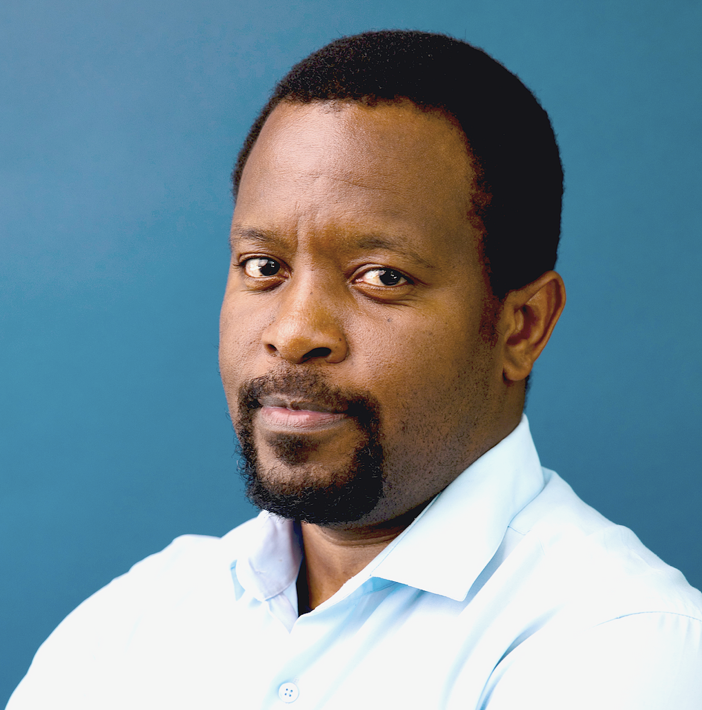
David Gate
Investments Molibilization
David Gate is a seasoned professional with over a decade of experience in identifying and originating high-yield investment opportunities and helping companies access funding and expand into new markets. He has a proven track record in navigating emerging markets, particularly in Eastern and Southern Africa. His extensive background includes transformative roles in enterprise development and investment consulting, where he specialized in structuring complex investments and interventions that significantly impacted local economies. David’s strategic approach is informed by his robust network of senior business leaders, investors, and entrepreneurs, which he has cultivated through his various roles. His expertise lies in aligning investor expectations with development outcomes, exploring new growth avenues in infrastructure and development projects. David’s experience within the UK Department for Business and Trade has endowed him with a profound comprehension of the UK’s trade and investment priorities in Africa. He is currently consulting on the establishment of The UK Investor Interchange Hub by the UK government. His work is pivotal in enhancing Africa’s economic competitiveness on the global stage.

Mungai N. Lenneiye
Policy & Institutional Development
Mungai N. Lenneiye is the Founder Trustee and Director at Udugu Institute, which focuses on Policy, Innovation, and Education; involved in managing incubation spaces. Currently working as a Senior Policy Advisor and focusing on Leadership Development Policy Dialogue; especially on devolution. Former World Bank Country Manager in Zimbabwe; and before that Senior Social Protection Specialist at the World Bank in Washington DC. Many years’ experience in planning, project design, institutional development, and leading multi-sectoral teams. Facilitator and co-convener of African Leadership Development Program in Southern Africa – covering agriculture, health, nutrition, and other sectors.

Fambaoga Myambo
Engagement & Coordination
Fambaoga Myambo is a distinguished Zimbabwean with professional experience in project management, leadership development, and strategic planning, especially in their application to Spatial Development Initiatives (SDIs). He has since 2022 been the National Coordinator of an SDI Anchor Project (Chirundu Border Post Upgrade) to enhance regional integration and trade facilitation. His other experiences include working as (a) Project Manager at COMESA Clearing House for an EU-funded regional Integration Implementation Project; (b) Assistant Deputy Director and Commissioner at the Competition & Tariff Commission (CTC) dealing with policy development, staff management, and national economic strategies in the Zimbabwe Ministry of Industry & Commerce as; (c) Ministry of Economic Development as Chief Economist focusing on research, staff training, and coordination of national economic development programs; and (d) Ministry of Transport & Communication in the promotion of Spatial Development Initiatives (SDIs) and regional integration programs. He has also served as a Board Member of the Consumer Council of Zimbabwe, and undertaken consultancy work for the Central Bank of Swaziland and AMADI in strategic management and leadership development. He has also been involved in the preparation of Zimbabwe’s policy documents on National Trade Policy, National Economic Development Programme, and Spatial Development Initiative position paper. He holds undergraduate degrees in Commerce and International Business Administration and a Masters in International Business Administration.

Nyarai Mahari
Systems Management
Nyarai Mahari is an organized and efficient project manager with over 14 years of experience in managing large-scale IT-related projects. Specializing in divestments, acquisitions, and mergers projects in North America (United States and Canada). Nyarai is currently working with Spatial Development Initiative (SDI) Promotion . She is well-versed in project management methodologies, organizational change management, risk management, technical implementations of software projects, and cloud development & migration projects. She has extensive experience in these areas, enabling her to drive successful outcomes for complex projects. Passionate about Pan-Africanism, Nyarai has a strong interest in contributing to the development of Africa. With advanced experience in entrepreneurial projects, she is committed to fostering growth and innovation across the continent.

Luxon Mandividze
Finance and Project Management
Luxon Mandividze. With over three decades of relevant specialist international experience in investments, banking and finance, project management and advisory services, Luxon has worked for a broad array of leading international financial institutions, including Standard Chartered Bank Treasury Harare, Merchant Bank of Central Africa, Premier Bank and a couple of other banks in Zimbabwe. Luxon has vast experience working with Governments and private entities in Africa in such countries as Cote d'Ivoire, Tanzania, Ghana, Guinea and DRC, proving strategic financial advisory services, structuring syndicated financing deals, portfolio management, mobilising funding and managing multi million dollar infrastructure development and housing projects. His investment philosophy is shaped by curiosity and continuous learning about market dynamics, as well as the relationship between economic factors and different investment types. Luxon's major strengths include being an experienced Consultant and Strategist with a proven track record of success in developing strategic business plans, executing business process re-engineering initiatives, and improving organisational performance. He is also adept in conducting market research to identify opportunities and mitigate risks and to effectively analyse complicated/detailed data and create clear concise reports for developing strategic growth plans and implementing cost saving measures to reduce organisational overheads and boost profitability. Among other qualifications in Management, Banking and Finance, Luxon is also a holder of a Doctorate (PHD) in Finance and Strategic Management (Honorary).
A Corridor is Only as Strong as Its Weakest Feeder: Unlocking Inclusive Growth Through Spatial Development
Corridor Integration Matters
- Zimbabwe depends on key corridors: North-South, Beira, Maputo, Walvis Bay
- Over 70% of exports rely on these links
- Corridors reduce transport costs by 30-40%
- Spatial Development Initiatives (SDIs) align logistics with regional industrialization
- Anchor Projects are essential starting points, but must be complemented by feeder projects
- Integrated corridors as cornerstone for Rural Industrialization move goods and services
At the heart of Africa's transformation is a simple truth: a corridor is only as strong as its weakest feeder. This phrase has deep implications for regional trade, rural industrialization and the future of inclusive development across the continent. In the context of Zimbabwe and the broader Southern African region, it is a call to rethink infrastructure, investment, and inclusion from the ground up.
Trade and transport corridors such as the North-South, Beira, Maputo, and Walvis Bay are the arteries of Southern Africa's economy. These Spatial Development Initiatives (SDIs) do more than link ports to production zones; they are regional integration pathways with over 70% of Zimbabwe's exports flowing through these corridors; enabling access to global markets, lowering transport costs by 30-40%, and driving cross-border value chains.
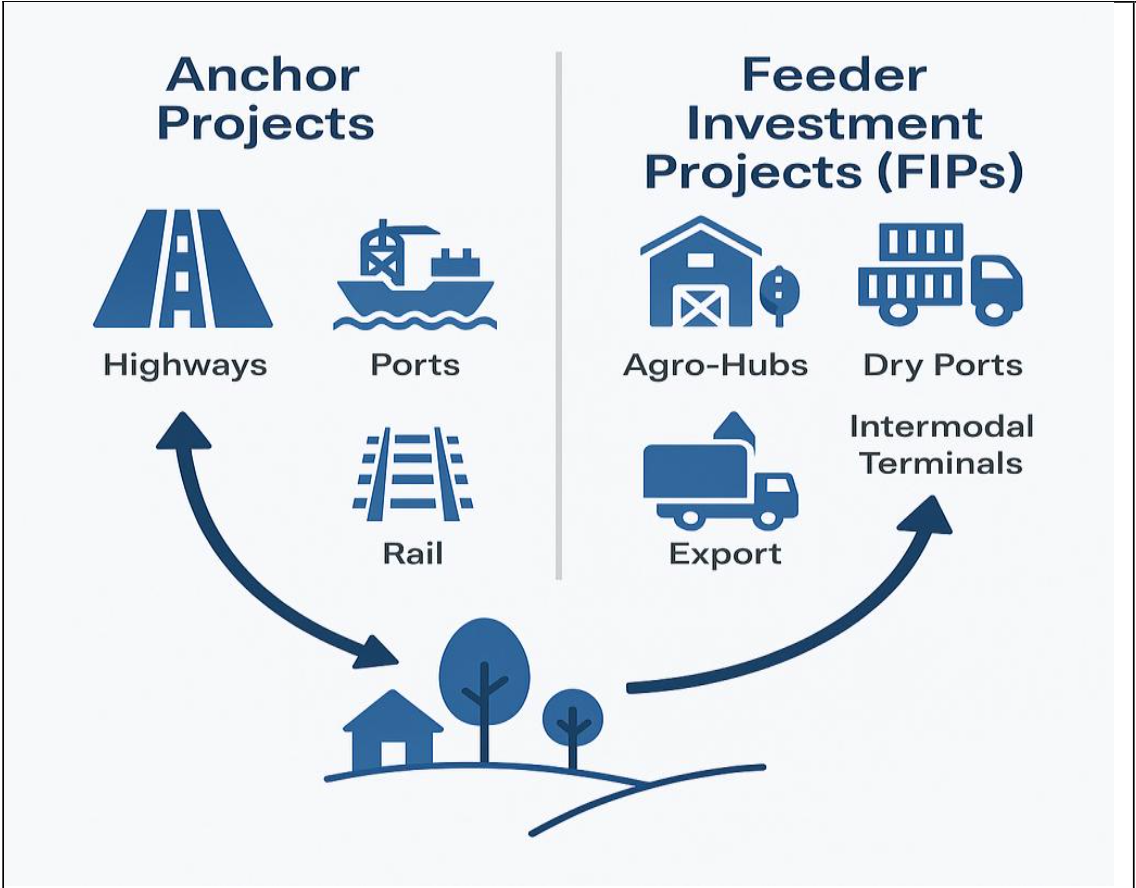
Corridors rely on Anchor Projects of major highways, rail links, border posts, ports, and energy infrastructure that serve as the structural backbone. Anchor Projects are essential for scale and regional reach; but they are not enough. Without functioning Feeder Investment Projects (FIPs) -- the smaller often rural linkages that connect communities and enterprises to anchor infrastructure -- the full economic potential of these corridors will remain unrealized.
FIPs are the connective tissue of an effective corridor, and include:
- Agro-logistics hubs in rural growth centres
- Dry ports and clearance zones near border towns
- Rural intermodal terminals linking road, rail, and river networks
- Trucker rest areas and turnaround facilities
- Digital logistics nodes that support small-scale exporters and logistics SMEs
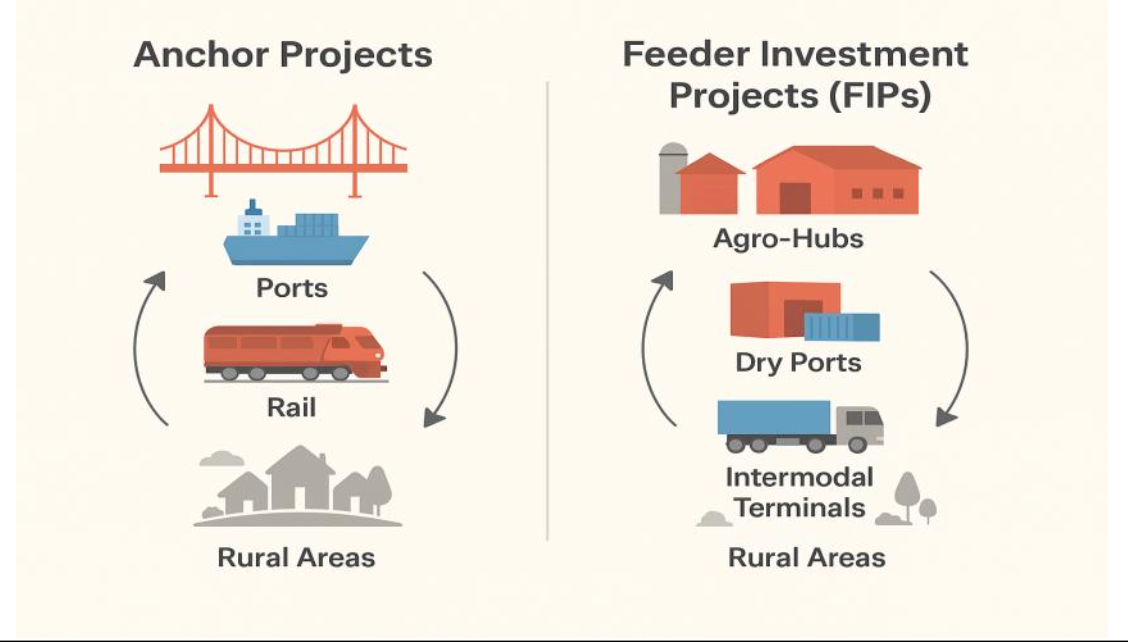
The Impact of FIPs
Feeder Investment Projects might appear modest compared to a port upgrade or a cross-border highway (anchor projects), but they unlock the value that lies beyond the immediate infrastructure footprint. They ensure that farmers in Chiredzi, traders in Plumtree, or small manufacturers in Gokwe are not left behind.
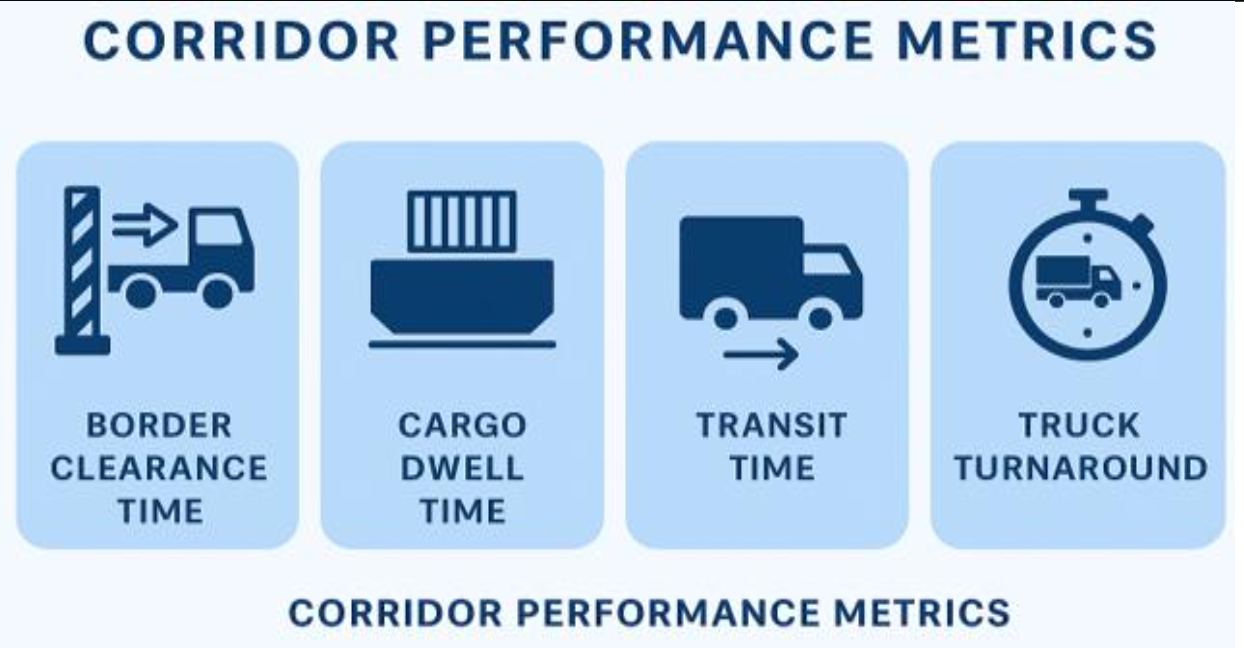
Development partners and governments are increasingly focusing on corridor performance; a measurable framework for tracking the efficiency, speed, and reliability of transport routes. It includes indicators such as:
- Border clearance time
- Cargo dwell time at dry ports
- Transit time from hinterland to export node
- Truck turnaround efficiency
Corridor performance shifts the focus from building to functioning; and asks: Are corridors serving the people and sectors that need them most?
The Udugu Institute's SDI Promotion approach embraces the corridor as a planning and coordination platform, and not just a line on a map. It links anchor infrastructure with spatially targeted investment in FIPs seeking to integrate national development goals with private sector opportunity. It helps unlock rural potential by coordinating land use, value chain development, and public-private partnerships within a framework of inclusive development through Rural Industrialization with value addition.
Through SDI Promotion, Udugu reimagines corridors as development ecosystems, with anchor and feeder investments deliberately aligned to transform lagging areas into growth zones.
Southern Africa has important precedents:
- The Walvis Bay Corridor Group (WBCG) in Namibia shows the power of a multi-stakeholder platform tracking corridor performance with real-time logistics data
- The Lobito Corridor from Angola to Zambia will demonstrate the effectiveness of blended finance models for intermodal investment
- In Zambia and Malawi, local agro-processing hubs located along secondary routes are now seen as essential feeders into high-traffic export corridors
Zimbabwe's logistics challenges are not due to a lack of ambition or planning; they stem from a gap in integration. Anchor Projects such as border modernization and road upgrades are progressing, but feeder systems remain under-resourced.
The Beira Corridor is a strategic route for eastern Zimbabwe's exports, without rural staging zones in areas like Mutare or trucker service points between Nyamapanda and Harare, the full potential of this corridor remains stunted. The same applies to the North-South Corridor where SME exporters in Masvingo or Matabeleland struggle to access regional transport despite proximity to a key trade artery. By investing in feeder projects, often under US$5 million in capital, Zimbabwe can exponentially increase the impact of larger corridor investments.
At the grassroots level, corridors can be tools for rural industrialization within a Local Economic Development (LED) Framework. When feeder systems connect farmers to agro-processing parks, miners to regional smelters, or artisans to export depots, value addition flourishes.
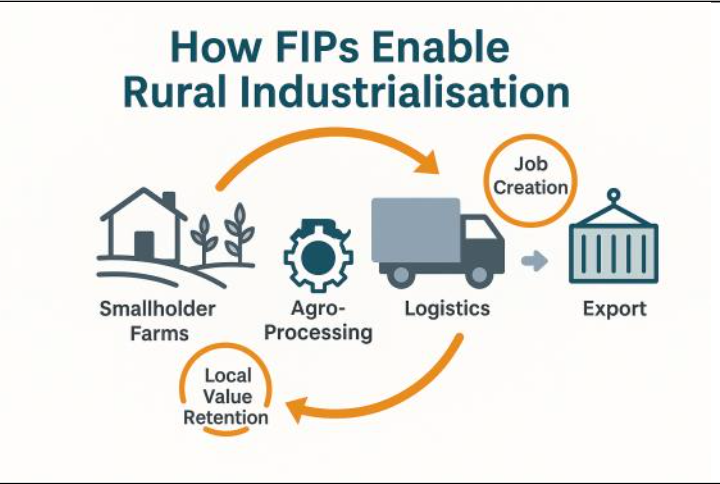
FIPs help build:
- Localized jobs in transport, processing, and services
- Decentralized supply chains that retain more value in-country
- Entrepreneurial ecosystems linked to regional and global markets
Feeder Investment Projects shift the development narrative and turn "gateway to market" into "network of opportunity."
As the European Union's Global Gateway Initiative rolls out across Africa, it should go beyond headline projects and make corridor performance and feeder development some of its priorities for:
- Co-investing in corridor performance; not just construction
- Linking anchor + feeder projects to ensure sustainability and drive rural industrialization
- See SDI Promotion as a ready vehicle for collaboration, co-financing, and policy alignment
Specifically, the EU can:
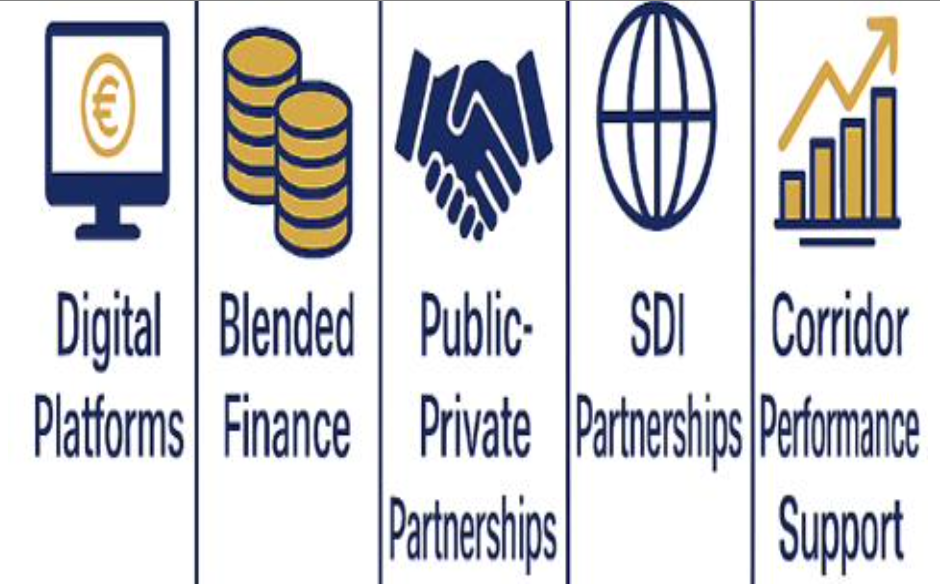
- Fund digital logistics platforms to support small-scale shippers
- Back feeder road and hub development through blended finance
- Promote performance-based corridor management contracts
- Facilitate PPP frameworks that incentivize feeder-linked anchor projects
- Support SDI Promotion partnerships with local and regional governments
To build corridors that work, we must stop treating feeder systems as afterthoughts. They are not peripheral, but are foundational because without well-functioning feeders, anchor investments risk becoming monuments to under-utilization.
It is critical to build performance-based corridors that:
- Link people to markets
- Create jobs in rural areas
- Reduce trade costs and transit time
- Attract inclusive private investment
SDI Promotion can be used as a mechanism to align infrastructure, policy, and investment.
Ensure that no feeder is too small to matter.